MONTRA ERP
Multi-tenant maintenance-operations ERP — fault calls, preventive visits, live technician dispatch, parts and contracts.
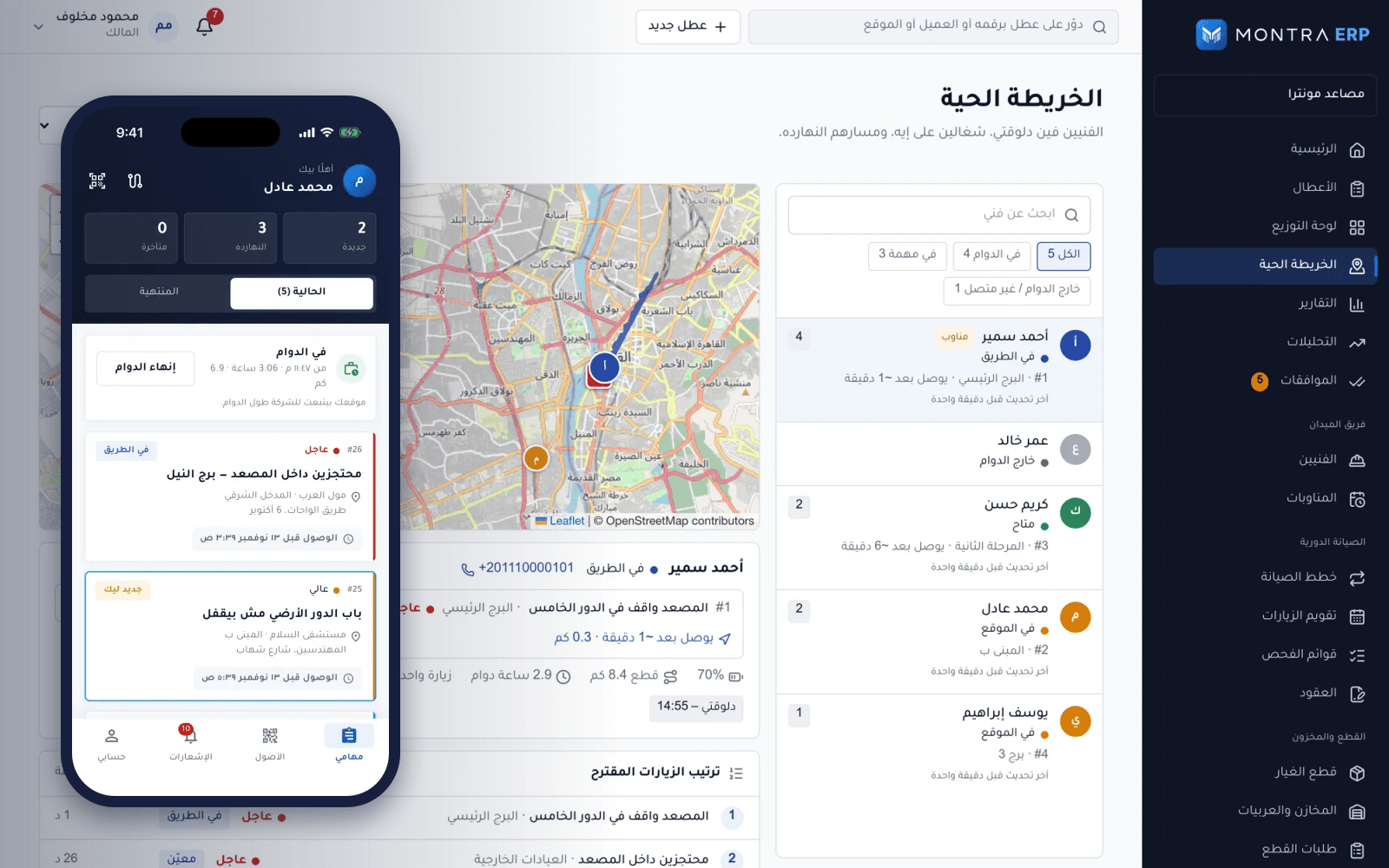
// By the numbers
- Tables under row-level securityevery tenant table ships with its isolation policy in the same migration
- 0 / 50
- API p95 latencyload test with 200 concurrent technicians, 0% errors — target was 500 ms
- 0 ms
- Built-in reportsjob costing, SLA, parts and technician performance, with scheduled e-mail
- 0
- Sector templateselevators first, ready-made setups for six more maintenance trades
- 0
What the business was up against
Elevator maintenance companies carry hundreds of contracts, each promising periodic visits and a response time on breakdowns. In practice the work ran on phone calls and WhatsApp groups: nobody knew which technician was nearest, preventive visits were missed until a lift stopped, spare parts left the warehouse without a trace, and month-end costing was a guess. Missed visits and slow responses are exactly what clients cancel contracts over.
MONTRA ERP runs the field operations of a maintenance company. A breakdown call or a scheduled preventive visit becomes a job; the dispatch board ranks which technician should take it; the technician is tracked live until they arrive, then photographs, reports and requests parts from a mobile app. Spare parts, vans, contracts, cash custody, costing and reporting sit in the same system. It is sold as multi-tenant SaaS in Egypt and Saudi Arabia, and the same codebase installs self-hosted for companies that need it on their own servers.
See it working
Real screens from the shipped product, recorded on demo data.
Where dispatchers and supervisors at a maintenance company log faults, see every technician on the map, assign the closest one and sign off finished jobs.
How it's put together
L1Surfaces
- Operations Panel
- Technician App
- Customer Tracking
- Platform Admin
L2Application layer
- Multi-tenant API
- Job Workers
L3Data & integrations
- PostgreSQL + PostGIS
- Live Maps
- Payments
- Object Storage
One multi-tenant API behind every surface; each tenant walled off by row-level security.
The calls that shaped it
- ADR-01
Tenant isolation enforced twice
Every query filters by company, and PostgreSQL row-level security pins the tenant inside each transaction as a second wall. The API connects as a role that does not own the tables, so a missed filter fails closed instead of leaking another company's data.
- ADR-02
Append-only audit at the database level
The database role the application uses has no UPDATE or DELETE on the audit log. A history that the app itself cannot rewrite is the only kind worth showing an auditor or a client in a dispute.
- ADR-03
Scoped, non-escalating permissions
Permissions are resource.action strings with a data scope — whole company, one branch, or only my own tasks. No one can grant a role more power than their own, so delegation to branch managers is safe by construction.
- ADR-04
Background jobs that run exactly once
Scheduled work — preventive-visit generation, SLA escalation, report e-mails — runs on BullMQ with PostgreSQL advisory locks, so it fires once per tick across replicas, and deliveries retry with exponential backoff.
- ADR-05
One codebase, SaaS or self-hosted
Plans, limits and billing sit in a platform-admin layer above the tenants, and a license mode turns the same build into an on-premise install — one product serving both buyers who rent and buyers who must own.
Signature capabilities
Live dispatch
A board that ranks the best technician for each job by distance and load, tracks them on a map to site, and escalates before an SLA is breached.
Preventive plans that run themselves
Contracts define visits by calendar or meter reading; the system creates the jobs on time, so a missed visit is an exception, not the default.
Parts with a chain of custody
Every part is traced from warehouse to van to job, with approvals for outside purchases and cash custody per technician.
Defensible multi-tenancy
Row-level security, a non-owner database role and an append-only audit log keep each company's data isolated and its history tamper-evident.
Business feature set
18Features
Field operations5
- Customers, sites and asset registry
- Full fault lifecycle from call to closure
- Shifts and live technician tracking map
- Dispatch board with ranked technician suggestions
- SLA warnings and automatic escalation
Preventive maintenance3
- Maintenance contracts and meters
- Versioned checklists
- Time- or meter-based plans that create visits automatically
Parts & money4
- Spare parts, warehouses and vans
- Part requests and outside purchases
- Cash custody and approvals queue
- Job costing and 13 reports with Excel import / export
Platform6
- Multi-branch, multi-tenant with role-based permissions
- Offline-capable technician app
- Customer tracking page and WhatsApp updates
- Plans, limits and online payments
- Self-hosted license mode
- Arabic / English with full RTL
What changed operationally
- Fault calls and preventive visits handled in one job lifecycle
- Live technician tracking and a ranked dispatch board with SLA warnings and escalation
- Spare parts traced from warehouse to van to job, with approvals and cash custody
- Preventive plans by time or meter reading that create visits automatically
- Customer tracking page and WhatsApp status updates
- Templates for seven maintenance sectors beyond elevators
What we had to work within
- Each tenant's data must be provably isolated — maintenance contracts and client sites are confidential
- Technicians work in basements and shafts with poor signal, so the field app has to work offline
- Arabic-first interface with full English parity across admin and field apps
- Runs on a modest VPS alongside other services, under tight memory caps
- Local payment gateways for Egypt and Saudi Arabia
What I owned
- Product scope and competitor analysis
- Multi-tenant architecture and security model
- Database design with row-level security migrations
- API: auth, RBAC, jobs, SLA engine, inventory, contracts, costing
- Operations panel in Arabic and English
- Flutter technician app
- Billing, platform admin and self-hosted packaging
- Docker deployment, CI/CD and load testing
Built with
Backend
Jobs & cache
Frontend
Mobile
Infrastructure
Engineering notes from this project
- AI features in SaaS: multi-provider fallback, no surprise billsHow to add AI features to a SaaS product that survive provider outages and quota limits: multi-provider fallback, per-customer keys, and cheap models per task.
- Field Service Management Software: Building Technician DispatchHow field service management software ranks technicians by skill, distance and workload, tracks them live and never misses a preventive visit. From Montra ERP.
- Live Order Tracking and In-App Chat for On-Demand AppsHow we built live order tracking, in-app chat and job broadcast to riders in Ajza, kept WebSockets alive behind nginx, and handled background location rules.
- Offline-First Flutter App Sync for Field TechniciansHow an offline-first Flutter app keeps technicians working with no signal: an ordered outbox, sync on resume, safe retries and an offline reading cache.
- Saudi Payment Integration: Lessons From Three Live ProductsSaudi payment integration lessons from three live products: mada, Apple Pay, Tabby and Moyasar, webhooks, verification and the checks that keep money correct.
- WhatsApp Business Integration: Order Updates and an AI BotHow we connected WhatsApp to two live systems: order-status messages, an AI bot that looks up orders safely, and choosing Cloud API vs a self-hosted gateway.
Want something like MONTRA ERP?
Boutique software studio — agency-quality systems, built by a senior engineering team.
// Related work
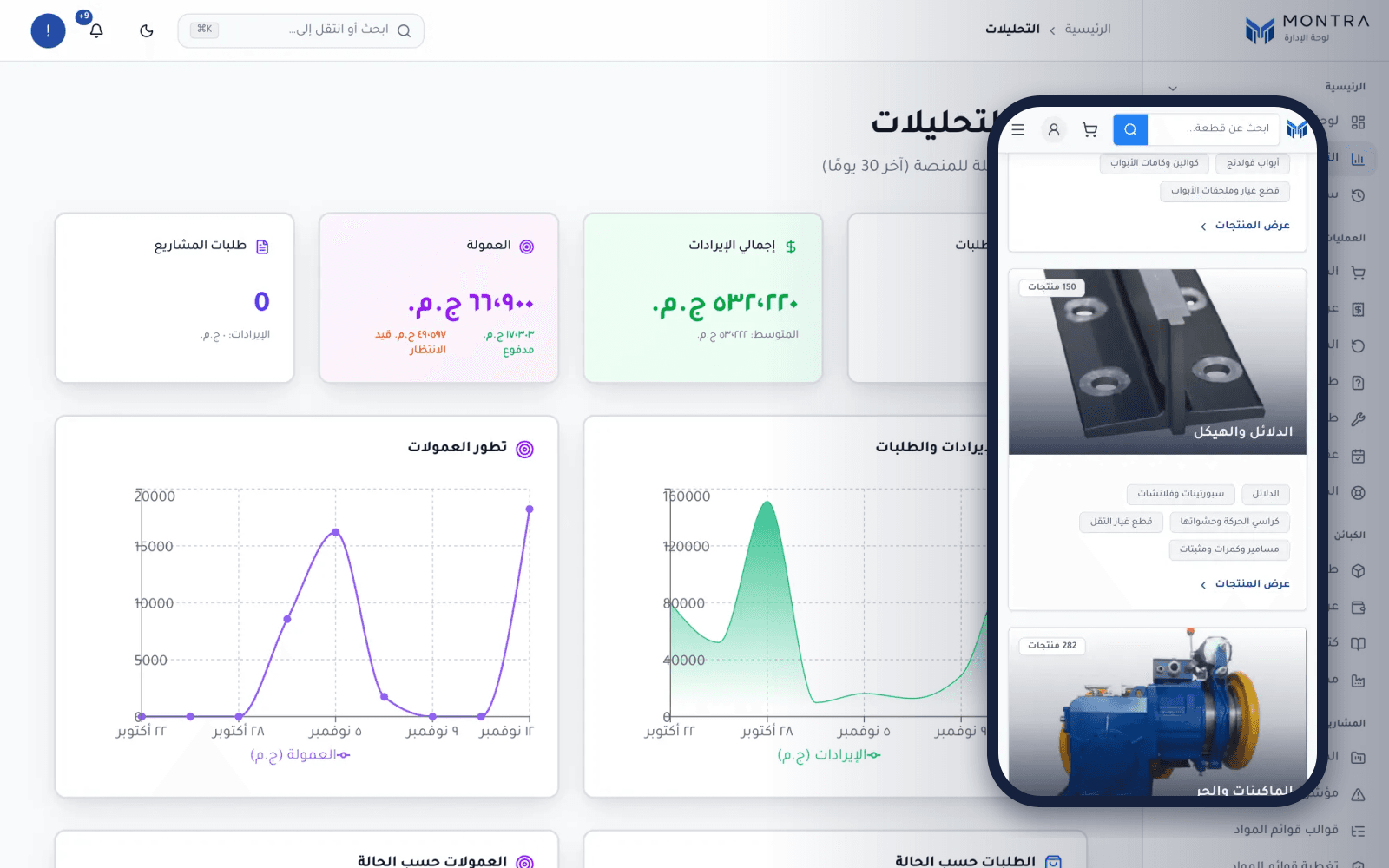
Marketplace 2025
MONTRA Marketplace
B2B elevator spare-parts marketplace — smart order routing, RFQ workflows, tamper-proof ledgers.
- TypeScript
- NestJS
- Prisma
100%Money traceability
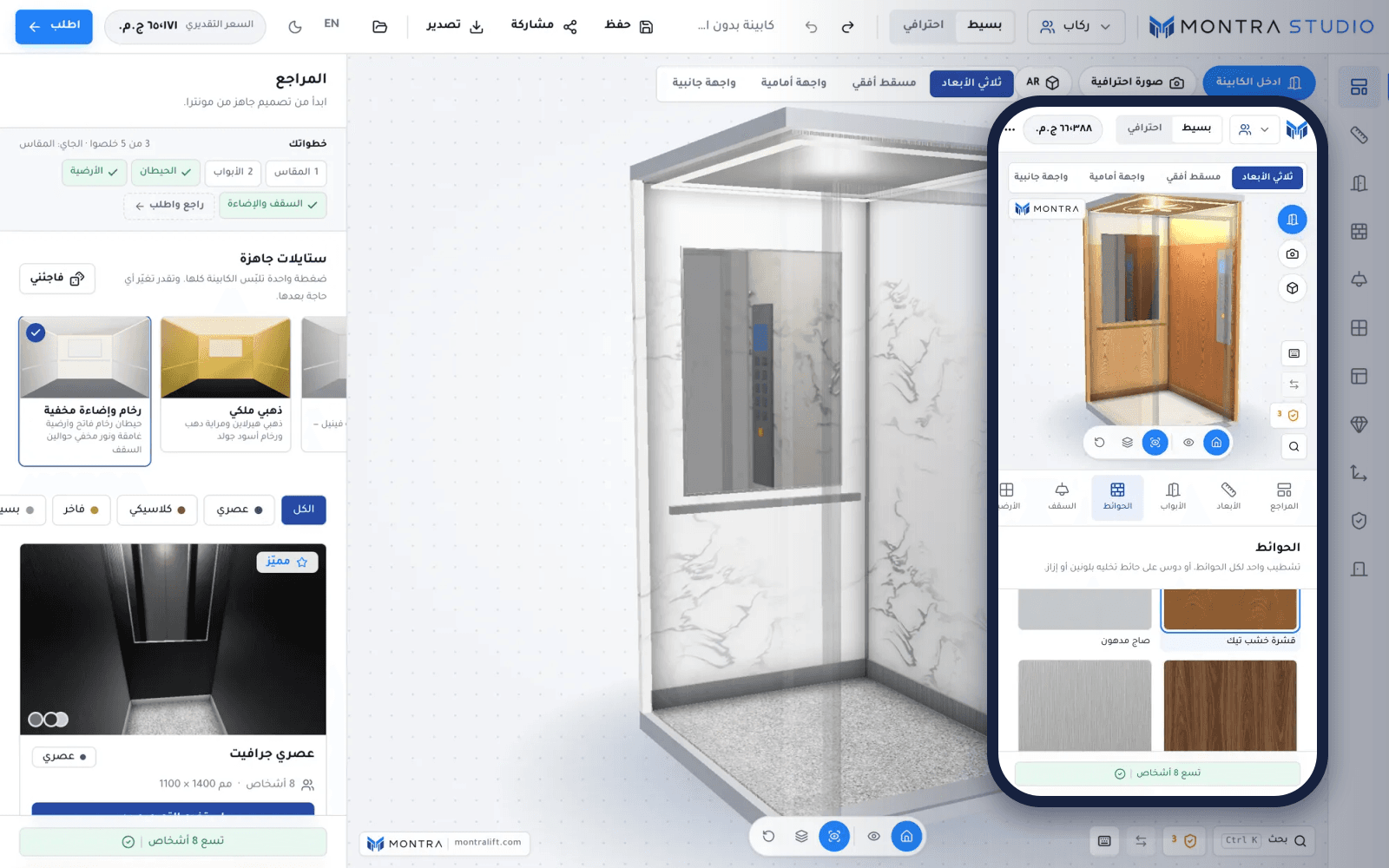
Web platform 2026
MONTRA Cabin Studio
A browser-based 3D elevator cabin designer — configure, check against EN 81-20, price and order in one flow.
- TypeScript
- Three.js
- WebGL
4Lift types
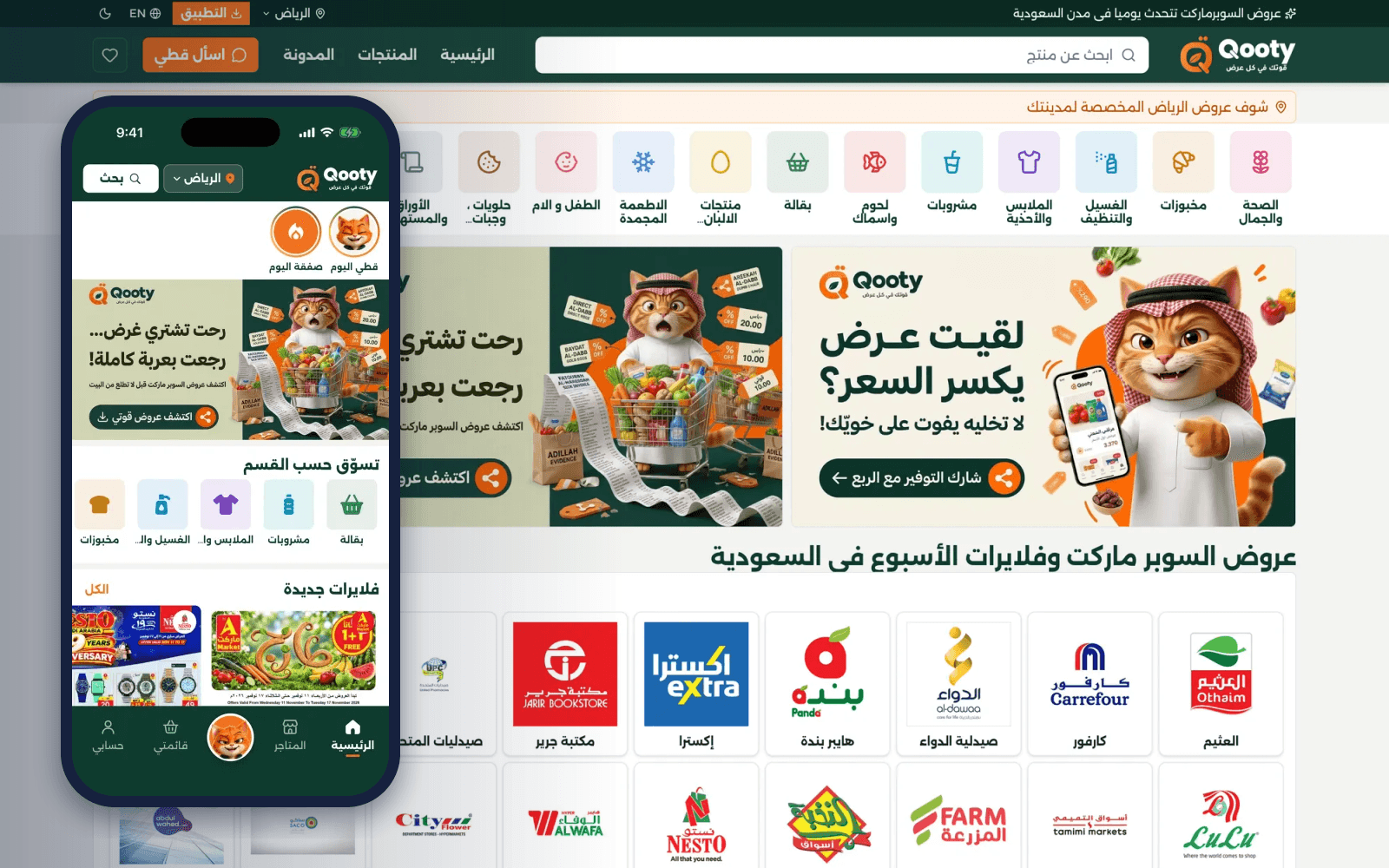
Web platform 2025
Qooty
AI-driven shopping offers & flyers platform — vision ingestion, SEO at scale, multi-tenant.
- TypeScript
- Next.js
- React
1.5MGoogle impressions